



What’s the weather like in Dubai?
Overall, Dubai’s weather is warm and sunny throughout the year. However, summer temperatures can be extreme, especially during the day. It is important to take precautions against heatstroke and dehydration during this time.
Dubai’s climate is ideal for outdoor activities, beach days, and cultural exploration. Visitors can enjoy activities such as swimming, sunbathing, desert safaris, and sightseeing year-round.
Current weather conditions in Dubai can be found on our website below.
Current weather in Dubai
We suggest taking a look at the temperature in Dubai for the next 5 days. This will allow you to plan your vacation and ensure a comfortable trip to sea on a yacht. Dubai is famous for its luxury and ideal climate for a yacht holiday. However, to make your trip as comfortable as possible, it is important to plan according to weather conditions.
Dubai weather throughout the year
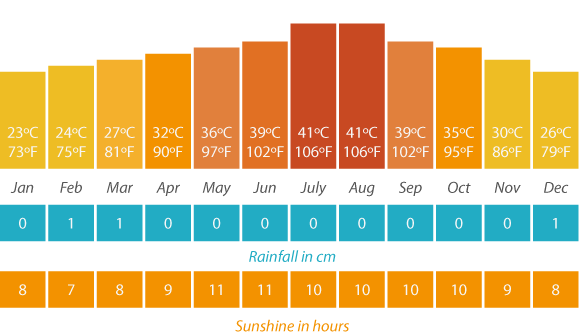
Dubai is known for its hot desert climate, which features long, hot summers and short, mild winters. The city enjoys year-round sunshine, with only occasional rainfall during the winter months.
Summer in Dubai is extremely hot and humid. Temperatures can soar to extreme highs, especially in July and August. Humidity levels are also high, which can make the heat feel even more oppressive. However, the city is well-equipped with air-conditioned malls and attractions where you can escape the heat.
Winter in Dubai is mild and pleasant. Temperatures range from 20-25°C (68-77°F), and humidity levels are lower. There is some rainfall during the winter months, but overall the weather is dry and sunny. This is an ideal time of year to enjoy outdoor activities and explore the city’s attractions.
Overall, Dubai’s climate allows for year-round enjoyment of a variety of activities. In the summer, you can cool off with water sports and visit indoor attractions, while in the winter you can explore the desert and enjoy the beach.
Dubai weather today
On our website you can see the current weather in Dubai for today. The widget displays the current temperature, humidity, atmospheric pressure, and wind speed.
Mornings tend to be cool and pleasant, with temperatures around 20-25°C (68-77°F). Humidity levels are also relatively low, making the morning hours ideal for outdoor activities or sightseeing.
As midday approaches, temperatures begin to rise, peaking in the early afternoon. During the summer months, temperatures can soar to 40°C (104°F) or higher, and humidity levels also increase. It is best to stay in the shade or in air-conditioned areas during this time of day.
Overall, Dubai’s weather throughout the day ranges from cool and pleasant in the morning to hot and humid in the afternoon, and back to cool and comfortable in the evening and overnight.
Weather in Dubai: wind and wave data
Dubai’s coastal location on the Arabian Gulf means that it experiences a variety of wind and wave conditions throughout the year. The city is known for its calm waters and light winds, which make it a popular destination for swimming, sailing, and other water sports.
During the summer months (April to October), the prevailing wind direction is northwesterly. Winds are generally light to moderate, with speeds ranging from 10 to 20 knots. Waves are also typically small, with heights of 1-2 meters (3-6 feet).
In the winter months (November to March), the wind direction shifts to the southeast. Winds can be more variable during this time of year, and speeds can reach up to 25 knots. Waves can also be larger, with heights of up to 3 meters (9 feet) during storms.
Overall, Dubai’s wind and wave conditions are ideal for a variety of water sports. The calm waters and light winds make it a great place to learn to sail or windsurf, while the larger waves in the winter months provide a challenge for experienced surfers.
It is important to note that these are just general averages, and actual wind and wave conditions can vary depending on the specific day and time of year.
When is the weather good in Dubai
Dubai has a hot desert climate, with long, hot summers and short, mild winters. The best time to visit Dubai for good weather is during the winter months, from November to April. During this time, temperatures are more moderate, with average highs in the mid-20s to low-30s Celsius (70s to low-90s Fahrenheit). Humidity levels are also lower during the winter, making it more comfortable to spend time outdoors.
What will the weather be like in Dubai in summer
The weather in Dubai in summer is hot and humid, with average high temperatures in the high 40s Celsius (110s Fahrenheit). Humidity levels are also very high during this time, making it feel even hotter.
What will the weather be like in Dubai in winter
The weather in Dubai in winter is mild and pleasant, with average high temperatures in the mid-20s Celsius (70s Fahrenheit). Humidity levels are also lower during this time, making it more comfortable to spend time outdoors.
When it’s cold in Dubai
Dubai’s climate is classified as hot desert, which means that it experiences very hot summers and mild winters. It is rare for temperatures in Dubai to drop below 10°C (50°F), even in the winter months.
When is it hot in Dubai?
Dubai is known for its hot weather, with average temperatures ranging from 25°C (77°F) in January to 41°C (106°F) in August. The hottest time of year in Dubai is during the summer months, from June to September. During this time, temperatures can reach up to 50°C (122°F) or higher.
When is the season in Dubai
Summer: The summer season in Dubai runs from May to September. During this time, temperatures are high, with average highs in the mid-40s Celsius (110s Fahrenheit). Humidity levels are also high, making it feel even hotter.
Winter: The winter season in Dubai runs from October to April. During this time, temperatures are more moderate, with average highs in the mid-20s to low-30s Celsius (70s to low-90s Fahrenheit). Humidity levels are also lower, making it more comfortable to spend time outdoors.
When the sea is warm in Dubai
The sea in Dubai is warm all year round, with average water temperatures ranging from 22°C (72°F) in January to 32°C (90°F) in August. The sea is warmest during the summer months, from June to September.
What a sea in Dubai
The sea in Dubai is part of the Arabian Gulf, which is a marginal sea of the Indian Ocean. The Arabian Gulf is a relatively shallow sea, with an average depth of around 35 meters (115 feet). The waters of the Arabian Gulf are warm and clear, making it a popular destination for swimming, snorkeling, and other water sports.
When can you swim in Dubai
You can swim in Dubai all year round, as the sea temperature is warm enough for swimming even during the winter months. However, the best time to swim in Dubai is during the summer months, from June to September, when the sea temperature is at its warmest.
When to rent a yacht in Dubai
The best time to rent a yacht in Dubai is during the winter months, from November to April. During this time, the weather is more moderate, with average temperatures in the mid-20s to low-30s Celsius (70s to low-90s Fahrenheit). The sea is also calmer during the winter months, making it more enjoyable to spend time on a yacht.
However, it is important to note that yacht rentals are available all year round in Dubai. If you are planning to rent a yacht during the summer months, be sure to book in advance, as demand is higher during this time. You should also be prepared for the heat and humidity, and take precautions to stay hydrated and protected from the sun.
What kind of sharks are found in Dubai
There are over 40 species of sharks found in the Arabian Gulf, which is the sea that Dubai is located on. However, only a few of these species are considered to be dangerous to humans.
The most common sharks found in Dubai include:
- Blacktip shark: This is a small to medium-sized shark that is found in coastal waters around the world. Blacktip sharks are not typically aggressive towards humans, but they have been known to attack if provoked.
- Nurse shark: This is a bottom-dwelling shark that is found in tropical and subtropical waters around the world. Nurse sharks are not typically aggressive towards humans, but they have been known to bite if they are stepped on or otherwise disturbed.
- Zebra shark: This is a medium-sized shark that is found in the Indo-Pacific region. Zebra sharks are not typically aggressive towards humans, but they have been known to attack if they are provoked.
However, it is important to note that shark attacks are very rare in Dubai. The waters around Dubai are well-protected by lifeguards and other safety measures, and there have been no fatal shark attacks in Dubai in recent years.
How much does it cost to rent a yacht in Dubai
The cost to rent a yacht in Dubai varies depending on a number of factors, including the size of the yacht, the type of yacht, the duration of the rental, and the time of year.


You may also be interested
Dubai, located on the coast of the United Arab Emirates, is washed by the waters of the Persian Gulf, which is part of the Indian Ocean. The Persian Gulf is located to the east of Dubai and stretches along its coast, giving the city access to warm sea waters that play an important role in the life and economy of this region.
Go to question pageIt is better to take UAE dirhams (AED) with you to Dubai for convenience of calculations. You can also take US dollars or euros, which can be easily exchanged for dirhams at exchange offices, banks and hotels.
Go to question pageThe following traditional dishes are worth trying in Dubai: - Mahbus: A rice dish with meat (lamb, chicken or fish) and spices. - Shawarma: Meat wrapped in pita bread with vegetables and sauce. - Mansaf: A dish of rice with mutton and yogurt sauce. - Hummus: Mashed chickpeas with olive oil, lemon juice and garlic. - - Lukuma: Sweet dough balls fried and drizzled with honey or syrup.
Go to question pageIn Malaga, you can rent a yacht from AnyShips. The resort town is perfect for sea adventures. The service owns comfortable motor yachts, sailing vessels and catamarans. Are you ready for an unforgettable trip? The AnyShips team is a reliable yacht rental partner in Malaga. Together with the rental service, only proven vessels with experienced captains and excellent service guarantee your safety. You can explore hidden coves, have a party on board or just relax, the perfect vacation will be provided.
Go to question pageIt is important to remember that there are strict rules regarding the import and export of certain goods. Drugs, pornographic materials, weapons and certain medicines are prohibited for import and can lead to serious consequences. When exporting goods, pay attention to restrictions on the amount of alcohol and tobacco products. If you are buying gold or jewelry, keep the receipts in case of customs control. I made sure that it is better to familiarize yourself with the rules of your country for the import of goods in advance in order to avoid trouble when returning home.
Go to question pageDubai combines modernity with deep traditions, so it is important to respect local laws and customs. Public displays of affection, such as kissing or hugging, are not welcomed and may provoke a negative reaction. Alcohol can only be consumed in licensed venues, and being intoxicated in public places can lead to fines or arrest. Drugs are strictly prohibited, and punishments for possession or use are very severe. I have always tried to be attentive and respectful, which allowed me to avoid any problems and fully enjoy the trip.
Go to question pageDesert Safari Dubai is a popular tourist excursion offering an immersive experience in the Arabian desert. This adventure allows you to explore the culture and nature of the region, combining adrenaline, entertainment and traditional hospitality. What Desert Safari usually includes: • Transfer: Pick up from the hotel and return in a comfortable SUV (usually a Toyota Land Cruiser). • Dune Bashing: Extreme driving on sand dunes with an experienced driver. This is one of the most exciting parts of safari. • Sunset Photo stop: The opportunity to take beautiful photos against the backdrop of a sunset in the desert. Camel riding: A traditional way of traveling through the desert. • Sandboarding: Boating on sand dunes. • Visit a Bedouin camp: A traditional camp where you can relax, drink Arabic coffee and tea, and taste dates. • Hookah (Shisha): The opportunity to smoke a hookah. • Henna painting: The traditional decoration of hands and feet with henna. • Barbecue Dinner: A delicious BARBECUE dinner with Arabic and international dishes. • Dance performances: Belly dancing, Tanura (whirling dance) and other traditional performances.
Go to question pageWeather in Dubai during the winter months (November-March): • Air temperature: During the day, it is usually +24°C - +28°C (75-82°F), at night it can drop to +15°C - +20°C (59-68°F). • Sunny days: Most days are sunny and clear. • Precipitation: Winter is the wettest period, but rains are rare and usually short-lived. • Water temperature: The water in the Persian Gulf remains warm enough for swimming in winter (+22°C - +24°C / 72-75°F). • Humidity: Humidity is lower than in summer, which makes the weather more comfortable. In general, the winter months are the best time to visit Dubai. The weather is warm and sunny, ideal for beach holidays, excursions and other outdoor activities.
Go to question pageEvents to celebrate the UAE National Day (Emirates National Day) Emirates National Day, celebrated on December 2, is a large–scale holiday dedicated to the formation of the United Arab Emirates in 1971. Various events are held throughout the country on this day.: Main events for the UAE National Day: • National parades: Vibrant parades featuring the armed forces, police, representatives of various emirates and cultural groups. • Airshow: Aerobatic teams demonstrate their skills by performing complex shapes in the sky. • Fireworks: Grand fireworks displays over the largest cities of the UAE, including Dubai and Abu Dhabi. • Cultural performances: Traditional Arabic dances, musical performances, exhibitions of handicrafts and folk crafts. • Car shows: Exhibitions of retro cars, tuned cars and motorcycles. • Concerts: Performances by famous Arab and international performers. • Themed decorations: Cities are decorated with national flags, garlands, and installations. • Sports events: Various sports events, including camel racing and horse racing. • Special offers in shopping malls: Many shopping malls offer discounts and promotions in honor of National Day. • Free activities for children: Entertainment programs, contests and games for children. • Exhibitions dedicated to the history of the UAE: Expositions telling about the history and culture of the country. • Visit Historical Sites: Many historical sites and museums offer free admission on National Day.
Go to question pageOf course, we are ready to provide you with the opportunity to organize a timbilding or corporate party.
Go to question page WhatsApp